2026-11-19 · Louic
Comparing Metal And Asphalt Roofing For High Wind Areas Near Great Falls
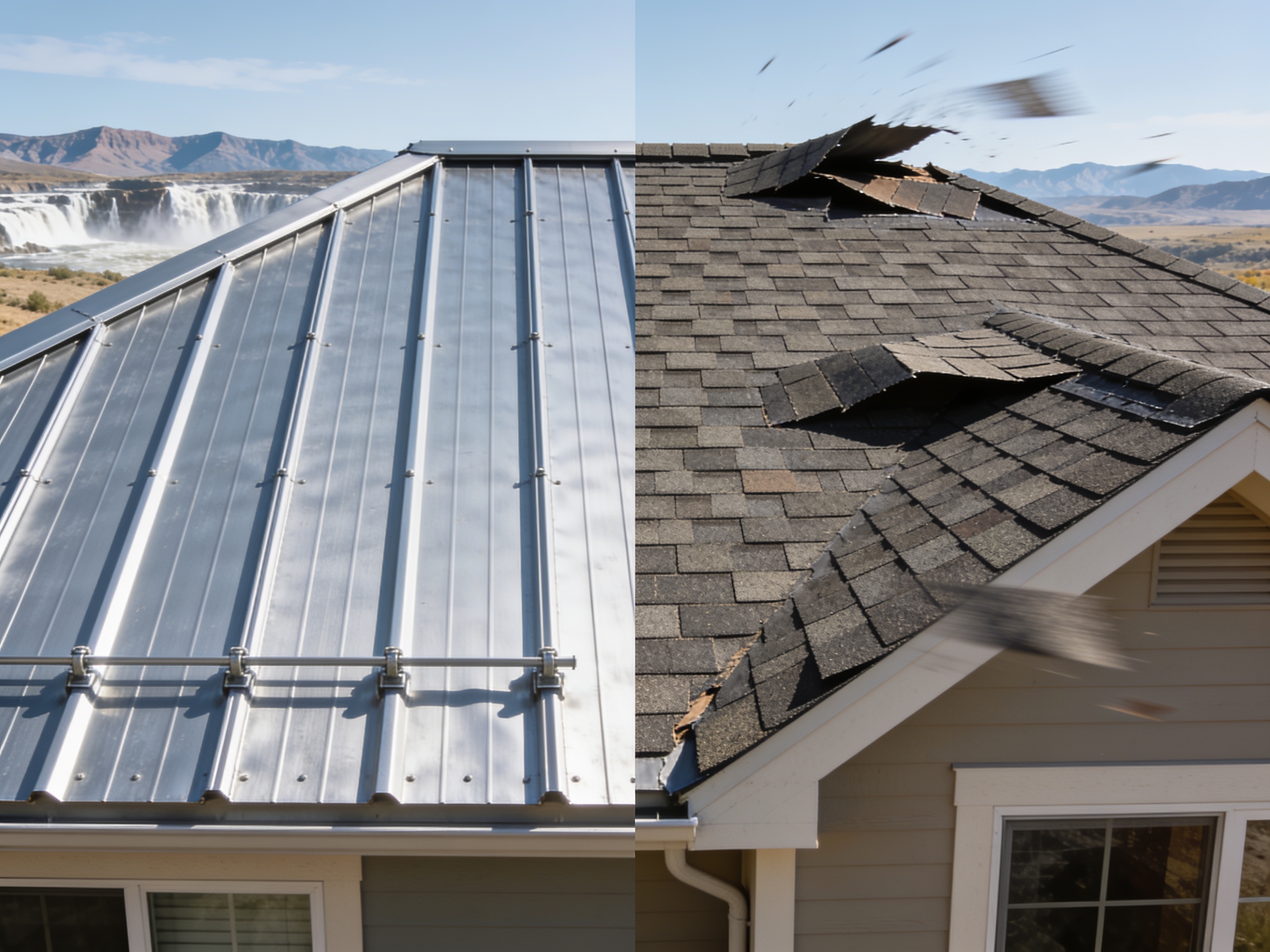
In high wind areas near Great Falls, metal roofing outperforms asphalt shingles by resisting sustained gusts up to 140 mph where asphalt typically fails above 110 mph. This difference shows up during Chinook events that hit Cascade County homes in Downtown Great Falls, Black Eagle, and West Great Falls each winter.
Wind Patterns That Affect Roofs in Cascade County
Chinook winds sweep through the Missouri River corridor and create sudden pressure changes on roofs across Cascade County. Homes built before 1980 in Downtown Great Falls often have older truss systems that flex more under these loads. Metal panels fastened with concealed clips or screws spaced at 12 inches transfer uplift forces directly into the deck, reducing the chance of panel lift. Asphalt shingles rely on sealant strips that soften in warm dry summers and lose grip after repeated freeze-thaw cycles common between Great Falls and Helena. Crews at Greatfalls Roofing see the same pattern on roofs in West Great Falls where open terrain lets winds accelerate before striking the structure.
Metal Roofing Attachment and Performance Details
Standing seam metal systems installed over solid decking in Black Eagle homes have shown no damage after recorded 90 mph gusts when fasteners penetrate at least 1 inch into rafters. The smooth surface sheds snow quickly, which matters during the cold winters that follow warm Chinook days. Thermal expansion joints every 40 feet prevent buckling on longer runs typical of ranch-style homes in West Great Falls. Metal Roofing crews schedule work between 8am and 6pm weekdays to align with stable weather windows before afternoon wind pickup. These details matter more than generic wind ratings when the roof sits 15 miles from the Great Falls of the Missouri where gusts funnel along the river.
Asphalt Shingle Limitations in High Wind Zones
Three-tab and architectural shingles rated at 110 mph still experience tab lifting when winds exceed 80 mph on older decks in Cascade County. Once lifted, the exposed nails become water entry points during the next warm dry summer rain. Homeowners in Downtown Great Falls often notice granule loss along ridge lines after repeated Chinook events. Asphalt Shingle Roofing remains common on smaller homes but requires more frequent ridge cap replacement. In areas with direct exposure like Black Eagle, crews add extra sealant at every tab during cooler installation temperatures to improve initial hold, yet this does not match the mechanical attachment strength of metal over the long term.
Practical Decision Factors for Local Properties
Roof slope, deck condition, and proximity to the river corridor guide material choice more than price alone. Metal adds 1.5 to 2 pounds per square foot versus 2.5 to 3.5 for asphalt, which can reduce load on aging trusses common in West Great Falls. Both materials need proper ventilation to handle ice dam formation after Chinook thaws. Roof Inspection Checklist After Chinook Winds Hit Cascade County outlines the exact checks performed after each event. Owners weighing replacement should also review What Homeowners Need To Know About Roofing Permits In Great Falls before starting work. Greatfalls Roofing operates from 321 26th St S and can be reached Mon–Fri 8am–6pm or Sat 9am–2pm for site-specific evaluations.